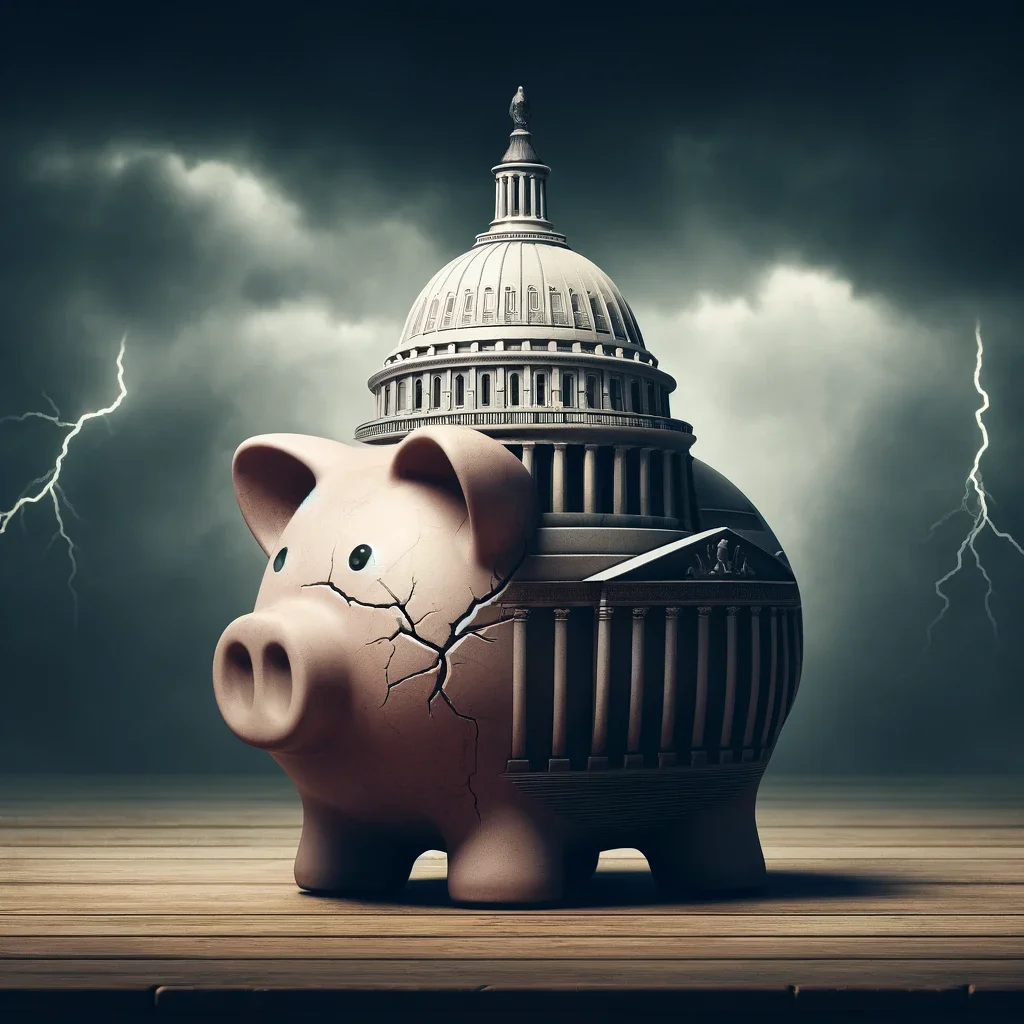
Roughly $100 billion.
Even in today’s world where politicians throw out the word ‘trillion’ as if it were a casual dinner garnish, $100 billion is still a lot of money… especially when you’re desperate to sustain glimmers of economic growth and trying to plug a budget shortfall that amounts to 13% of GDP.
And yet, roughly $100 billion is exactly what got sucked out of the United States in July by foreigners: “Net capital outflows” increased to $97.5 billion for the month of July, according to recent data released by the Treasury department. Meanwhile, net long-term capital inflows fell to a paltry $15.3 billion in July, an 80% decline from June’s $90.2 billion capital inflow.
What do these numbers mean?
Foreigners are continuing to lose confidence in the US economy at a record pace and are finding better places for their money. This would certainly support the US Dollar Index’s dramatic 3.5% decline in July– though the dollar index only tells a partial story. “DXY” as it is known, though, only tells part of the story.
The dollar index measures the value of the dollar only relative to a small basket of currencies– euro, pound, Canadian dollar, Swedish koruna, yen, and Swiss franc. Powerful Asian nations like the Gulf, China, Singapore, etc. are conspicuously missing. And yet, DXY still dropped 3.5% in July.
Conclusion? If these ‘relatively harmless’ countries that comprise the US Dollar Index are losing confidence in the greenback, you can be sure that China and the Middle East are knocking over women and children on their way to the emergency exit.
Telling you that the dollar will be continually worth less until it is ultimately worthless is nothing new. So if you would indulge me a moment, I’d like to prognosticate on the greater implications.
As the pace of these outflows picks up steam, you can be sure that a group of out-of-touch politicians are monitoring the data and thinking to themselves, “we need to regulate this before it gets out of hand!” And this sentiment is exactly what spawns capital controls.
Capital controls by design are intended to regulate the flow of capital in and out of a currency; in times of uncertainty, shaken politicians always pull this oldie-but-goody out of the playbook… it happened in Iceland, and it’s been discussed around the world recently– Russia, India, Brazil, the Baltics, Poland, Czech Republic, Kazakhstan, etc.
Not to mention, a world largely free of capital controls is a relatively new phenomenon. We can look to history for a recent example of a world superpower turning to capital controls for ‘stability’:
In the mid 1970s after the collapse of the Bretton-Woods system, the British economy was in serious trouble. GDP was contracting, unemployment rising, investment falling, and the government was drowning in red ink, all while social obligations were climbing.
Financial markets responded by turning their backs on Britain’s Pound Sterling, and the currency was crushed. The Wall Street Journal advised investors to ditch the British pound, running headlines “Good-bye Great Britain.” And the government came under intense pressure to ‘do something.’
The first thing the UK did was go to the international community with hat in hand to prop up the currency with loans and bonds. This is already happening in the United States as Tim Geithner attempts to woo China and Middle East into buying US Treasuries.
Subsequently, the British government imposed a slate of capital controls that essentially penalized investors for moving capital out of the country and requiring that all investment transactions go through ‘authorized dealers’ who were charged with enforcing this policy.
The penalty ranged from a 10% to 30% premium on the dollar/Pound spot rate at the time– essentially the same tactic that the Cuban government is employing today.
Frankly I can see the same thing happening in the United States, perhaps starting off with a penalty in the Treasury markets where there is the biggest sucking sound… imposing a sort of ‘restocking fee’ for foreign investors who don’t roll over to new issuances upon maturity.
Eventually, though, you can be sure that the government will impose controls at the consumer level as well– requiring a certain allocation of bank deposits to be held in US Treasuries, restricting foreign remittances, and mandating scrutinous approval for overseas wire transfers above a certain amount.
Naturally, US politicians would never call such measures ‘capital controls,’ because the world’s reserve currency must be freely convertible. They will likely wrap up these policies in the ‘anti-terrorism,’ ‘money-laundering,’ or ‘tax evasion’ blankets, and simultaneously wage a PR war against evil gold and currency speculators.
So what can you do? As I’ve mentioned before, buying foreign real estate is the single best way to move money overseas where it cannot be forcibly repatriated. Physical gold stored overseas is an excellent option as well– there are no reporting requirements for either.
I’ve also strongly suggested buying up such assets with tax-deferred retirement savings. In my opinion, there’s no better way to stay within the letter of the law than to buy foreign investment property and physical gold through a self-directed IRA… I am such a strong believer in this tactic that I negotiated a special discount with a trusted service provider who can set this up for you.
As I conclude this missive today, I see that the “world’s leaders” are gathered in Pittsburgh to listen to the sound of their own voices. Nothing will be accomplished, and they will emerge from their summit with nothing but sound-bytes, empty promises, and a continued fervor to exact tighter control over the markets.
Each of us has the ability to either plan for it, or dismiss reality and do nothing.